Reading the scripture in context is so important. From cultural context, historical context, the context of where the passage fits in the Biblical narrative…it’s alot. People literally go to college to learn how to read the Bible. So it might sound a little crazy to start teaching kids this at a young age. However, teaching them to be curious, critical thinkers when it comes to the Bible can help them as they transition to reading the Bible for themselves. And there are even tools to do this. Tools that make reading the Bible fun, engaging, and build skills in our littles to be life-long learners of the Word.
*Disclaimer: This post contains Amazon affiliate links. I recieve a small commission for purchases made through these links, but I only link to items I really love and think you will too.
We Who Thirst (ages 3+)
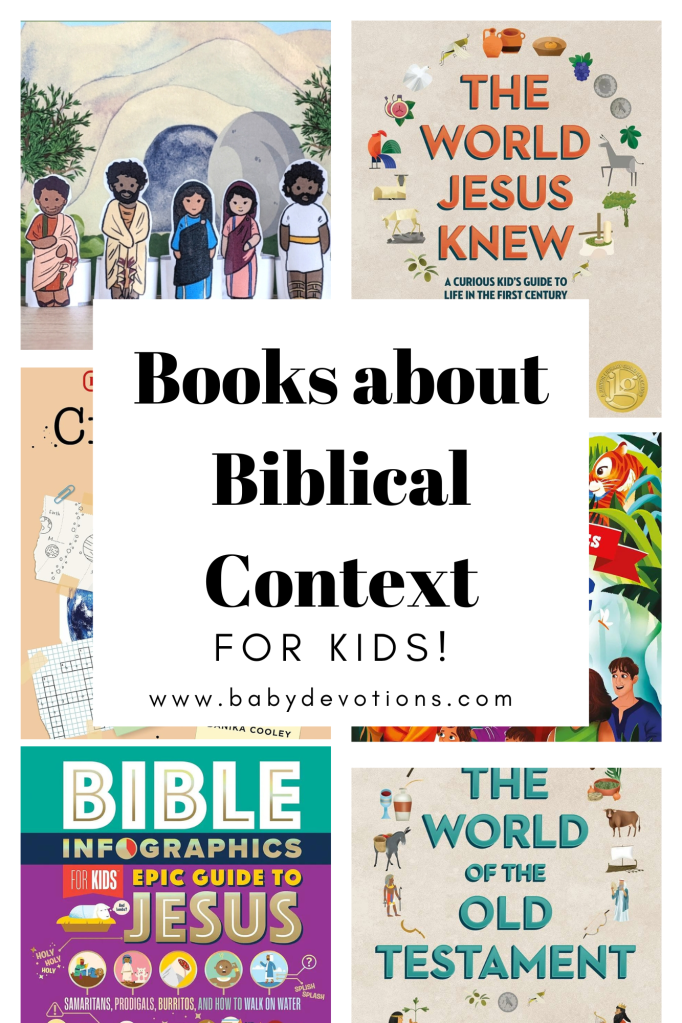
Jessica has some of the most amazing resources for exploring the cultural context of the Bible. From reading plans, to peg dolls, her ingenuity for bringing the Bible to life is a gift. We are especially big fans of her historically accurate paper doll sets. They are an economic resource for showing kids what the characters of the Bible might have actually looked like. She does her homework and has provide the cutest paper doll illustrations that are a wonderful tool for home study or smaller Sunday School classes.
God’s Big Promises Storybook Bible (3+)
Spanish Edition: Las Grandes Promesas de Dios Biblia de Historias para Niños(3+)
This is the newest Storybook Bible we have purchased, and one of they things that made it a win for us is the indicators on many of the pages showing where God made a promise in the Old Testament and fulfilled it in the New Testament. This knowledge can be very helpful in understanding the New Testament writers. They often drew parallels and pulled from the Old Testament to make a point in their writings. I also like that this storybook Bible offers extra context on quite a few stories. Like noting that Samaritans and Israelites were not friends. This is something that may not be known when simply reading the story of ‘The Good Samaritan’ but it’s an important detail for truly understanding the story.
Bible Infographics (ages 6+)
Spanish Edition: Biblia Infográfica para Niños
This book has so much good information, exploring various details from the Bible. We have particularly found helpful the illustrations of the Tabernacle and the family tree of Christ. I also love the context they provide for some of the more obscure stories. For example, the story of the 10 plagues shares that each plague was connected to a god the Egyptians worshipped. God was showing that he was greater than any of the Egyptian gods.
Curious Kids Guides (ages 6+)
We LOVE this series. These books are packed full of cultural and historical context which are so helpful for understanding scripture. Tim Mackey from The Bible Project often says ‘reading scripture is a cross-cultural experience,’ and these books bring that truth to light, while offering insight to what those cultures looked like.
Clues of the Good News
This study helps build detective skills in children who are just starting to read the Bible for themselves. It is a family study so parents get to help guide thoughts and conversation. Don’t worry, it comes with a parents guide, and it is specifically geared to help families notice the overarching Biblical narrative within each story, and helping littles practice God-centered storytelling while reading.
Bible Investigators (ages 8+)
This is a new resource we were sent from The Good Book Company and I knew it would be a hit in our home. My oldest loves mysteries. From the Inbestigators, to Carmen San Diego she loves the intrigue of looking a little closer for clues. So when I dropped this in her lap, the excitement was very real. This study brings joy and fun to looking a little closer at what scripture has to say, like a detective. It uses games, activities, and fun to engage elementary students in skill-building exercises that will help them read the Bible themselves. This first book focuses on the Creation story as a base for building skills for studying the Bible. I especially like that it focuses on logic and critical thinking skills, something that is so necessary to bring to the text.
And if you are looking to build your own Bible knowledge, I have a whole list of tools I use in this busy stage of Parenting:
 Baby Devotions